
Vein Disease Symptoms, Causes & Treatment in East Tennessee
Understanding Venous Disease
More than 30 million Americans suffer from vein disease and symptoms such as painful legs, varicose veins, or a more serious form of venous disease: Chronic Venous Insufficiency (CVI). Although the visible signs of vein disease are often looked at as merely a cosmetic issue, it is a progressive disease in which symptoms often worsen over time. Vein disease can negatively affect your quality of life if left untreated.
Common symptoms include (see below for more detailed descriptions of these symptoms):
- Varicose veins
- Leg or ankle swelling, worse at the end of the day
- Leg pain, aching, or cramping
- Leg heaviness and fatigue
- Restless legs
- Burning or itching of the skin
- Skin color and/or texture changes
- Lower leg ulcers
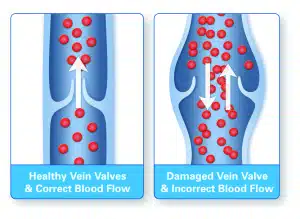
Symptoms and Complications of Venous Insufficiency
Varicose Veins
Varicose veins usually look dark blue, swollen, and twisted under the skin. Some people do not have any symptoms, however most patients develop symptoms over time that can produce pain, burning, and achiness that often curtails normal activities. These enlarged veins may look and feel better when the affected leg is elevated, however they become enlarged again while standing or walking. If left untreated they may progress to more serious conditions such as leg swelling, discoloration or leg ulcers.
Pain Aching, Itching and Heaviness
Many patients with venous reflux have these symptoms, and often they are left untreated because they may not be readily associated with vein issues. The pain often progresses through the day and is worse in the evening. Symptoms may also increase during menstruation. Successful treatment of varicose veins can alleviate these symptoms.

Swelling
Leg swelling generally occurs because of an abnormal accumulation of fluid in the tissues of the lower extremity. The medical term for leg swelling from excessive fluid in the tissues is edema, and is often a symptom of vascular insufficiency, the underlying cause of varicose veins. Edema typically causes swelling around the ankle and then spreads to the lower leg. Swelling will typically worsen during the day, and subside when the leg is elevated.
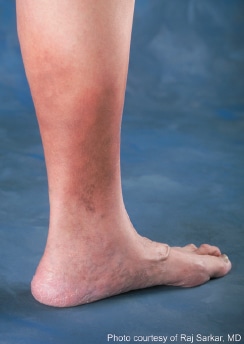
Discoloration
Skin discoloration usually occurs during more advanced stages of varicose veins. Some initial redness can be caused by inflammation, and as blood continues to pool under the skin, the breakdown of red blood cells causes the skin damage to advance and take on a tan or reddish-brown appearance.
Skin discoloration is often first noticeable around the ankles or low calves, but also frequently occurs over the shins and on the feet.
Skin discoloration that worsens can change from a reddish color to a tan or reddish-brown color and the skin can become painful, hardened, and scar-like. While it may take years of untreated venous disease for skin discoloration to worsen to such a degree, in can also occur suddenly and without warning.
Active Venous Stasis Ulcer
The most severe stage of vein disease is an active leg ulcer, or non-healing open wound. These most often occur in the lower leg and can range in size from very large to very small. They can take months, or years, to heal – if they heal at all. These ulcers are usually very painful, and may become infected. Many patients report severe pain while performing even simple activities like walking or standing.
Venous stasis ulcers often go untreated because they might not be identified as a symptom of venous insufficiency. At Milligan vein we have had great success treating this debilitating condition.
A venous ulcer is a serious condition that must be treated immediately.

What are Spider Veins?
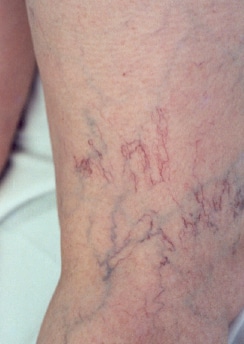
Spider veins are dilated vessels that appear purple and blue, and are easily visible through the skin. They are usually visible on the legs but are occasionally seen on the face as well. Unlike varicose veins, spider veins usually do not cause any serious medical problems, and are considered a cosmetic issue.
The treatment for spider veins is a procedure called Sclerotherapy, which is a minimally invasive procedure that is performed in the office. As a treatment for spider veins this procedure is typically not covered by insurance.
During the sclerotherapy procedure a solution is injected into the affected vein which causes the vein to dissolve, thereby resolving the problem. Recovery is immediate.